APC UPS Blog - ExcessUPS.com

  • Blog
  • Guides
  • Technical
  • Tips
  • Rants

What is an internally “Modular” Redundant UPS Configuration?

Businesses are starting to see the importance of ensuring their uninterruptible power supply devices have a back up to protect important information. As the use of N+1 configuration for a UPS system starts to increase, it is become important for businesses to select the best one suitable for their needs. Aside from the isolated redundant configuration and parallel redundant configuration, businesses also have the option to use an internally “modular” redundant configuration for their UPS system.

An internally modular redundant configuration or setup uses only one battery for all its UPS modules. If any of the modules fail to operate properly, the other modules will act as backup. This will ensure t3-apc-smart-ups-srt-5000va-with-208-240vhe equipment connected to the system will continue to receive power. This setup is the most basic type of N+1 UPS configuration. Aside from using just one battery, all of the UPS modules also share one output.

In this configuration, the load is shared by all of the modules up. The capacity of this set up can be increased with the addition of more modules. But, one major disadvantage of this configuration is the single battery it uses. If the battery fails to work, the system may not be able to provide the necessary power during an outage. The battery may not function properly once it reaches its shelf life.

An internally modular redundant configuration for a UPS system is an efficient way of protecting critical equipment of businesses. It can be easily configured to allow it to run close to its capacity. In this situation, a UPS system typically runs efficiently.
References:


http://www.schneider-electric.com/ww/en/download/document/APC_VAVR-A84MRT_EN?_downloadcenter_WAR_downloadcenterRFportlet_documentId=4015192344

http://www.apc.com/salestools/SADE-5TPL8X/SADE-5TPL8X_R3_EN.pdf

http://www.schneider-bgclub.com/catalog/1_Aparatura_NN/4.UPS/Katalozi/Design%20guide%20UPS.pdf
http://whatis.techtarget.com/definition/N1-UPS

http://searchdatacenter.techtarget.com/answer/Weighing-centralized-versus-modular-UPS-in-the-data-center

Filed Under: Tips Tagged With: Configuration, Internally Modular Configuration, ups

What are the Main Types N+1 UPS Configurations?

The N+1 UPS configuration is mainly designed for computer servers used in businesses. This configuration ensures a backup UPS is available in case the primary UPS fails to function properly during a power outage. The three main types of N+1 configuration are as follows:

Isolated Redundant Configuration

While an isolated redundant configuration is considered as an N+1 system, it does not have a paralleling bus and the UPS modules may have different capacities. Power goes through primary UPS device in this setup while the secondary or the isolation UPS is connected to the main UPS to act as backup in case the primary UPS does not work. When the main UPS fails to function properly, the secondary of isolation UPS devices takes over and provides backup power when the main source of power goes out.

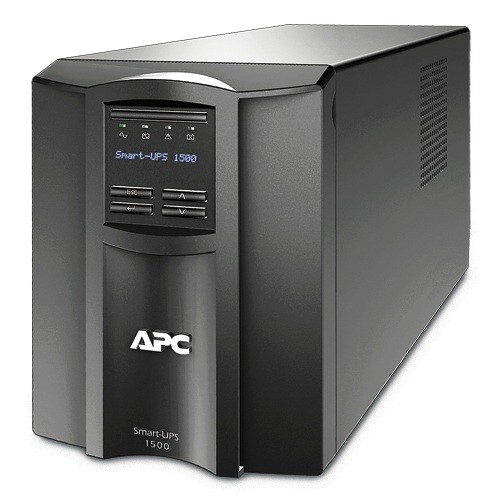
3-apc-smart-ups-1500va-lcd-120v-smt1500Parallel Redundant Configuration

The parallel redundant configuration features UPS devices positioned parallel to each other. The UPS devices in this configuration should have the same capacity and share an output bus. In addition, it is advisable to have UPS devices with the same brand for this configuration. When one UPS device in this configuration does work as it should, power will be transferred to the other UPS devices.

Internally “Modular” Redundant Configuration

An internally “modular” redundant configuration features a battery that is connected to each UPS device. This configuration features a battery system connected to all UPS devices. The UPS devices are connected to a common output bus. When one UPS device in this setup does not work properly, the other UPS devices ensure the battery system continues to function. But, the entire system may be affected if the battery needs to be replaced in this configuration.


References:

http://www.schneider-electric.com/ww/en/download/document/APC_VAVR-A84MRT_EN?_downloadcenter_WAR_downloadcenterRFportlet_documentId=4015192344

http://www.apc.com/salestools/SADE-5TPL8X/SADE-5TPL8X_R3_EN.pdf

http://www.schneider-bgclub.com/catalog/1_Aparatura_NN/4.UPS/Katalozi/Design%20guide%20UPS.pdf

Filed Under: Technical Tagged With: Configuration, N+1 UPS, ups